
IVF Pregnancy: Everything You Need to Know
Pregnancy after in vitro fertilization (IVF) is an exciting and unique journey. While many aspects are similar to natural conception, there are important differences and considerations specific to IVF pregnancies. This comprehensive guide covers everything you need to know about your IVF pregnancy, from early symptoms to delivery and beyond.
Early Signs and Symptoms of IVF Pregnancy
Early pregnancy symptoms after IVF are similar to natural conception but may be more pronounced due to hormone medications:
- Implantation Bleeding: Light spotting 6-12 days after transfer
- Breast Tenderness: Often more noticeable due to progesterone
- Fatigue: Extreme tiredness in early weeks
- Nausea: Morning sickness may start earlier or be more intense
- Mood Changes: Hormonal fluctuations can cause emotional swings
- Bloating: Common due to progesterone and early pregnancy
Important: Many early symptoms can also be caused by progesterone medications, so don't rely solely on symptoms. Wait for your pregnancy test.
The First Trimester: Weeks 1-12
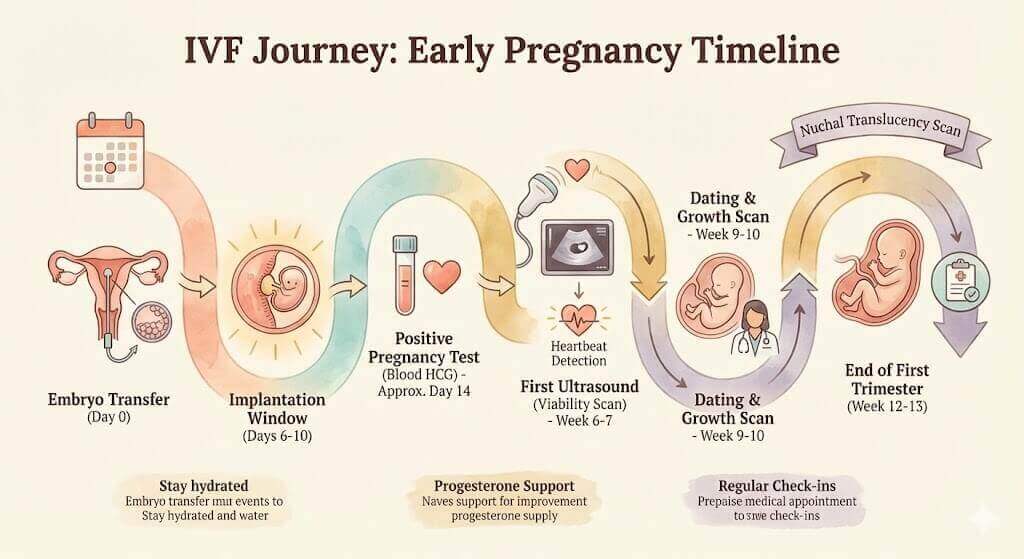
Week 1-2: Implantation and Early Development
During the first two weeks after transfer:
- Embryo implants into the uterine lining (6-12 days after transfer)
- Pregnancy hormone (hCG) begins production
- Early pregnancy symptoms may start
- Pregnancy test becomes positive (10-14 days after transfer)
Week 3-4: Confirmation and Early Growth
- First ultrasound confirms pregnancy (usually 5-6 weeks)
- Fetal heartbeat may be detected (6-7 weeks)
- Yolk sac and gestational sac visible
- Continue progesterone support
Week 5-8: Rapid Development
- Baby's organs begin forming
- Heartbeat clearly visible on ultrasound
- Morning sickness often peaks
- First prenatal appointment typically scheduled
Week 9-12: End of First Trimester
- Risk of miscarriage significantly decreases
- Baby's major organs are formed
- Nuchal translucency screening (if chosen)
- May begin tapering progesterone (per doctor's instructions)
Prenatal Care for IVF Pregnancies
IVF pregnancies typically receive standard prenatal care with some additional considerations:
Initial Monitoring
- Early Ultrasounds: More frequent in first trimester
- hCG Levels: Blood tests to confirm rising levels
- Progesterone Monitoring: May check levels to ensure adequate support
Standard Prenatal Care
- Monthly visits until 28 weeks
- Bi-weekly visits from 28-36 weeks
- Weekly visits from 36 weeks until delivery
- Standard screenings and tests
Special Considerations
- Due Date Accuracy: IVF due dates are more accurate (see our calculation guide)
- Multiple Pregnancy: Higher risk requires additional monitoring
- Age Factors: Older mothers may need additional screening
Calculating Your Due Date
IVF due dates are calculated differently and more accurately than natural conception:
- Day 3 Embryos: Transfer date + 263 days
- Day 5 Embryos: Transfer date + 261 days
- Accuracy: Typically within 1-2 days vs. 5-7 days for natural conception
Use our IVF due date calculator for accurate calculations based on your transfer date and embryo stage.
Common Concerns and Questions
Is IVF Pregnancy Different?
After the first trimester, IVF pregnancies are generally similar to natural pregnancies. The main differences are:
- More accurate due date calculation
- Early monitoring and support
- Slightly higher risk of certain complications
- Often more closely monitored, especially if high-risk
Risks and Complications
IVF pregnancies have slightly higher risks of:
- Multiple Pregnancy: Twins or higher-order multiples
- Preterm Birth: Slightly increased risk
- Low Birth Weight: More common with multiples
- Gestational Diabetes: Slightly higher risk
- Preeclampsia: Slightly increased risk
However, most IVF pregnancies progress normally and result in healthy babies.
Nutrition and Lifestyle During IVF Pregnancy
Nutrition Guidelines
- Folic Acid: 400-800 mcg daily (start before pregnancy)
- Iron: Important for preventing anemia
- Calcium: 1000-1300 mg daily
- Protein: Adequate intake for fetal development
- Hydration: Plenty of water throughout pregnancy
Foods to Avoid
- Raw or undercooked meat, fish, and eggs
- Unpasteurized dairy products
- High-mercury fish
- Excessive caffeine (limit to 200mg/day)
- Alcohol (avoid completely)
Exercise and Activity
- Continue moderate exercise if cleared by doctor
- Avoid high-impact or contact sports
- Listen to your body and rest when needed
- Stay active with walking, swimming, or prenatal yoga
The Second Trimester: Weeks 13-27
Often called the "honeymoon period" of pregnancy:
- Morning sickness typically subsides
- Energy levels increase
- Baby's movements become noticeable (18-22 weeks)
- Anatomy scan at 18-20 weeks
- Gender reveal (if desired) possible
The Third Trimester: Weeks 28-40+
Final stretch of pregnancy:
- More frequent prenatal visits
- Baby's growth accelerates
- Preparations for delivery
- Signs of labor education
- Final preparations for baby's arrival
Delivery and Postpartum
Delivery Options
- Vaginal Delivery: Most common, even for IVF pregnancies
- C-Section: May be recommended for multiples or complications
- Induction: May be considered if pregnancy goes past due date
Postpartum Considerations
- Standard postpartum recovery
- Breastfeeding support (same as natural pregnancy)
- Emotional support (postpartum depression risk similar)
- Follow-up care with fertility clinic (if needed)
Emotional Support and Mental Health
IVF pregnancy can bring unique emotional challenges:
- Anxiety: After struggling with infertility, anxiety is common
- Guilt: Some feel guilty about needing assistance
- Isolation: May feel different from "natural" pregnancies
- Support: Seek support groups, counseling, or therapy if needed
Conclusion
IVF pregnancy is a beautiful and unique journey that, after the early stages, is very similar to natural pregnancy. With proper care, monitoring, and support, most IVF pregnancies progress normally and result in healthy babies. Remember to celebrate this achievement and enjoy your pregnancy journey.
For more information, explore our guides on IVF due date calculation, understanding IVF, and early pregnancy week by week.